
Soil Investigation
Establish the subsurface profile before ground conditions become a construction problem.
The ground beneath a site is rarely uniform.
A development site may comprise variable soil, fill, weathered materials, rock and groundwater conditions. A properly planned site investigation provides direct evidence that can support engineering assessment and design.
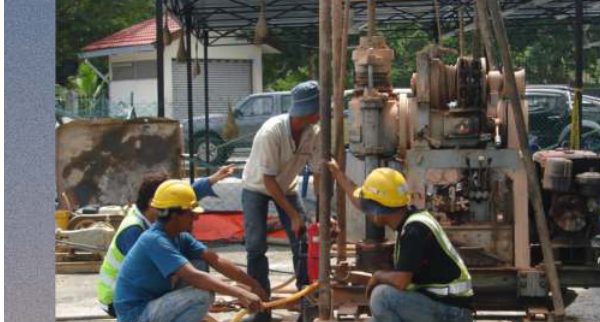
Six core investigation activities.
Borehole Investigation
Investigation of subsurface soil and rock strata through boreholes.
SPT
In-situ testing to characterise penetration resistance at selected depths.
Soil Sampling
Collection of representative samples for appropriate laboratory assessment.
Rock Coring
Recovery and logging of rock core where rock investigation is required.
Trial Pits
Near-surface investigation where appropriate.
Groundwater Observations
Recording groundwater conditions encountered during investigation.
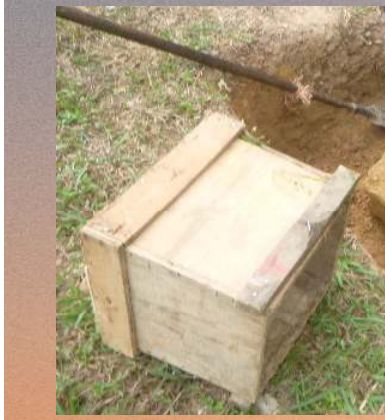
Trial Pit & Hand Auger

Mackintosh Probe

Core Samples
What you receive, depending on scope.
- Borehole logs
- SPT records
- Sample information
- Rock core records
- Groundwater observations
- Location plans
- Geological interpretation
- Technical report
Important: soil investigation scope should be developed around the project objective, proposed structures, site geology and anticipated ground conditions.
There is no single investigation arrangement that is appropriate for every site.
Soil investigation questions.
How many boreholes are required?
Can previous borehole information be used?
Do you provide laboratory testing?
Discuss your site investigation.
Share your project location and objective — we'll propose an appropriate borehole and testing scope.